

For students with off-campus privileges at Prairie High School, the lunch period exists as a delicate, drive-through dance; The demanding 30 minutes a calculated balance of strategy, speed, and quality. While food and drink options with proximity to the school are nowhere near limited, there is a predictable formula most upperclassmen tend to follow.
Within a tight radius of the school and its surrounding area of Brush Prairie, a small but competitive ecosystem of lunch destinations has emerged across decades. From quick-service chains to local staples, these spots are shaped as much by their menus as by their ability to provide for one of their most significant customer demographics: high school students.
Among the most frequented is undoubtedly the regal monarchy of Dairy Queen, where predictability and speed reign supreme in the realms of burgers and Blizzards. Just a short drive away, it offers students a reliable option when time is limited and hunger is not. Equally popular is Taco Bell, known for its low prices, small bites, and customization options, an appealing combination for students stretching pocket change into weeks worth of lunches.
However, not all choices lean corporate. Local establishments like Buen Apetito and Don Angel Taqueria provide Mexican food truck alternatives with an emphasis on quality, often drawing repeat customers from Prairie, a cult following, so to speak. These locations, while slightly farther away than the Winco Foods complex across the street, remain well within reach for students willing to optimize their time, even those walking off campus as opposed to driving.
“I usually go somewhere quick like Taco Bell because I know I’ll make it back on time,” said PHS junior Owen Kartchner. “It’s just about not being late.”
Kartchner’s reasoning reflects a broader reality that often limits students from seeking out other nearby delicacies, such as “Getta Gyro” and “Seize the Bagel”. Long drive-thru lines, traffic along Northeast 119th Street, and unpredictable wait times all factor into decision-making. For many, the safest choice is not necessarily the most exciting or delicious, but the most efficient.
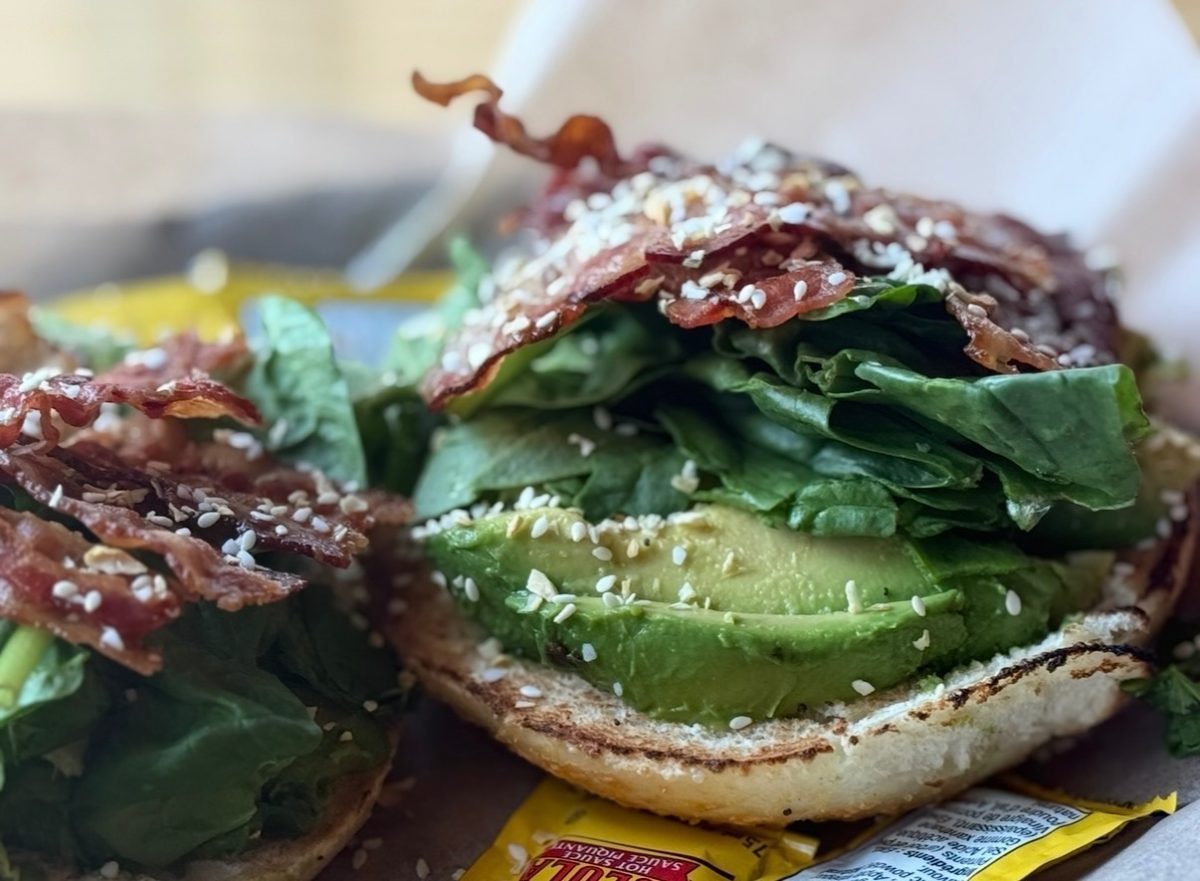
Still, others prioritize the variety and enrichment from subjectively higher quality food. “Sometimes it’s worth going a little farther if the food’s better,” said Emily Loftesness. “It can be exhausting eating school food everyday, and Taco Bell too. I love Seize the Bagel.”
That desire for change underscores a key tension in lunch-time discourse. While convenience wins most times, the monotony of such a routine can often eliminate the appeal of off-campus ventures to begin with. Restaurants that offer something distinct, whether it’s fresher ingredients, larger portions, or simply a different atmosphere, often become part of a rotating schedule rather than a one-time visit.
Despite it all, affordability remains the determining factor in a majority of cases. With most students paying out of pocket, value menus and portion sizes carry significant weight. In this sense, fast food chains maintain a structural advantage, though local businesses continue to compete by offering perceived quality and uniqueness. The system itself encourages a calculated risk: leave campus for a better meal, or stay and sacrifice true satisfaction.
For Prairie students, the status quo has become obvious. The cafeteria may be convenient, but it is no longer the default. Instead, lunch has become a daily choice shaped by assessing priorities; Time, cost, and the small but meaningful pursuit of something different.
As long as those factors remain in play, the roads surrounding Prairie High School will continue to see a steady stream of upperclassmen students chasing the same goal: a meal worth the trip and money, with just enough time to make it back before the bell.